Everyone knows Oktoberfest is the world’s biggest beer festival – but the celebration is packed with history, records and quirks that even regular visitors do not know. From its royal wedding origins to the staggering amount of beer poured each year, here are 20 fun facts about Oktoberfest that will make you the most interesting person at the table in 2026.
The origins
1. Oktoberfest began in 1810 as a celebration of the wedding of Crown Prince Ludwig of Bavaria and Princess Therese. The whole of Munich was invited to the fields outside the city gates.
2. Those fields were named the Theresienwiese (“Therese’s Meadow”) in the princess’s honour – which is why locals affectionately call the festival simply the “Wiesn”.
3. The very first Oktoberfest ended with a horse race, not a beer tent. The racing continued for years before beer and food stalls gradually took over.
4. Despite its name, most of Oktoberfest now takes place in September. The dates were moved earlier over the years to take advantage of warmer, longer autumn days.
The beer
5. Around seven million litres of beer are served at Oktoberfest every year – enough to fill several Olympic swimming pools.
6. Only beer brewed within the Munich city limits by its six traditional breweries – Augustiner, Hacker-Pschorr, Hofbräu, Löwenbräu, Paulaner and Spaten – may be served.
7. The festival beer is specially brewed and stronger than normal lager, at around 6% alcohol – one reason to pace yourself.
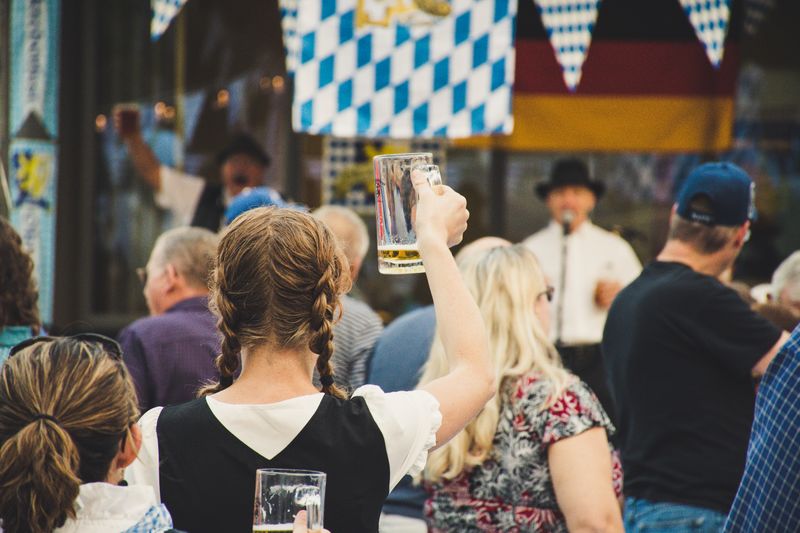
8. Beer is only sold by the litre, in the famous glass Maß. A full one weighs over two kilograms before you even add the beer.
Records and numbers
9. Oktoberfest attracts around six million visitors each year, making it the largest folk festival in the world.
10. Roughly half a million roast chickens are eaten over the two-week festival, alongside mountains of pork knuckles, sausages and pretzels.
11. The strongest Oktoberfest waitresses can carry an astonishing ten or more full steins at once – that is over 20kg of beer and glass.
12. Each year there is a vast lost-and-found haul, regularly including hundreds of phones, wallets, glasses, items of clothing and even the occasional set of dentures.
Traditions and ceremony
13. The festival officially opens at noon when the Mayor of Munich taps the first keg and shouts “O’zapft is!” – “It’s tapped!”.
14. No tent may serve beer until the mayor’s tapping is done – the whole festival waits for that single keg.
15. The number of mallet strokes the mayor needs to tap the keg is recorded each year; two is a point of civic pride.
16. The toast you will hear every few minutes, “Ein Prosit”, is a call to Gemütlichkeit – the untranslatable Bavarian sense of warmth and good cheer.
Quirks and customs
17. The side a woman ties her Dirndl apron bow reveals her relationship status: left for single, right for taken.
18. Standing on the benches to sing is encouraged, but standing on the tables will get you thrown out by security.
19. A quieter, nostalgic area called the Oide Wiesn (“Old Oktoberfest”) recreates the festival as it was a century ago, with historic rides and folk music.
20. Oktoberfest has been cancelled around two dozen times in its history, mostly due to wars and cholera epidemics – proof of how much it means to Munich that it always returns.
Frequently asked questions
Why is Oktoberfest in September? The dates were shifted earlier over the decades for better weather, so most of the festival now falls in September, ending in early October.
How much beer is drunk at Oktoberfest? Around seven million litres each year, served only by the litre in glass steins.
How old is Oktoberfest? It dates back to 1810, making the 2026 festival part of a tradition more than two centuries old.
More surprising Oktoberfest facts
The festival’s scale produces some astonishing numbers beyond the beer. Each year the Wiesn employs around 13,000 staff, from servers and cooks to security and ride operators, effectively becoming a temporary town for two weeks. The electricity used across the grounds could power a small district, and the tents – which look so permanent – are entirely temporary structures, painstakingly built in the months before and dismantled in the weeks after. The largest tents seat up to around 10,000 people each, more than many sports stadiums.
Traditions you might not know
Some of the festival’s quirks run deep. The Oide Wiesn charges a small entry fee, unlike the rest of the free grounds, to preserve its calmer, historic atmosphere. The festival observes a quieter, traditional-music-only policy in the tents until 6pm to keep the daytime family-friendly. And the famous gingerbread Lebkuchenherzen – the decorated hearts on ribbons – began as tokens of affection and are now one of the most popular souvenirs, with messages ranging from romantic to cheeky. Even the waitresses’ ability to carry a dozen steins at once is the result of real skill and training, not just strength.
Why Oktoberfest endures
For all its records and quirks, the real reason Oktoberfest has thrived for more than two centuries is simpler: it captures something universal. The combination of good beer, hearty food, live music and the warm, inclusive spirit of Gemütlichkeit creates a feeling people travel across the world to share. Wars and epidemics have interrupted it, prices and styles have changed, but the essential magic – thousands of strangers raising a glass together – has never wavered.
More questions answered
How many tents are there? Around 17 large tents and 21 smaller ones at the 2026 festival.
How big are the biggest tents? The largest seat up to roughly 10,000 guests each.
What is the Oide Wiesn? A nostalgic, historic area recreating the festival as it was a century ago, with a small entry fee.
Want to experience it all for yourself? Plan your visit with our trip planner, explore the beer tents, and check the 2026 dates.