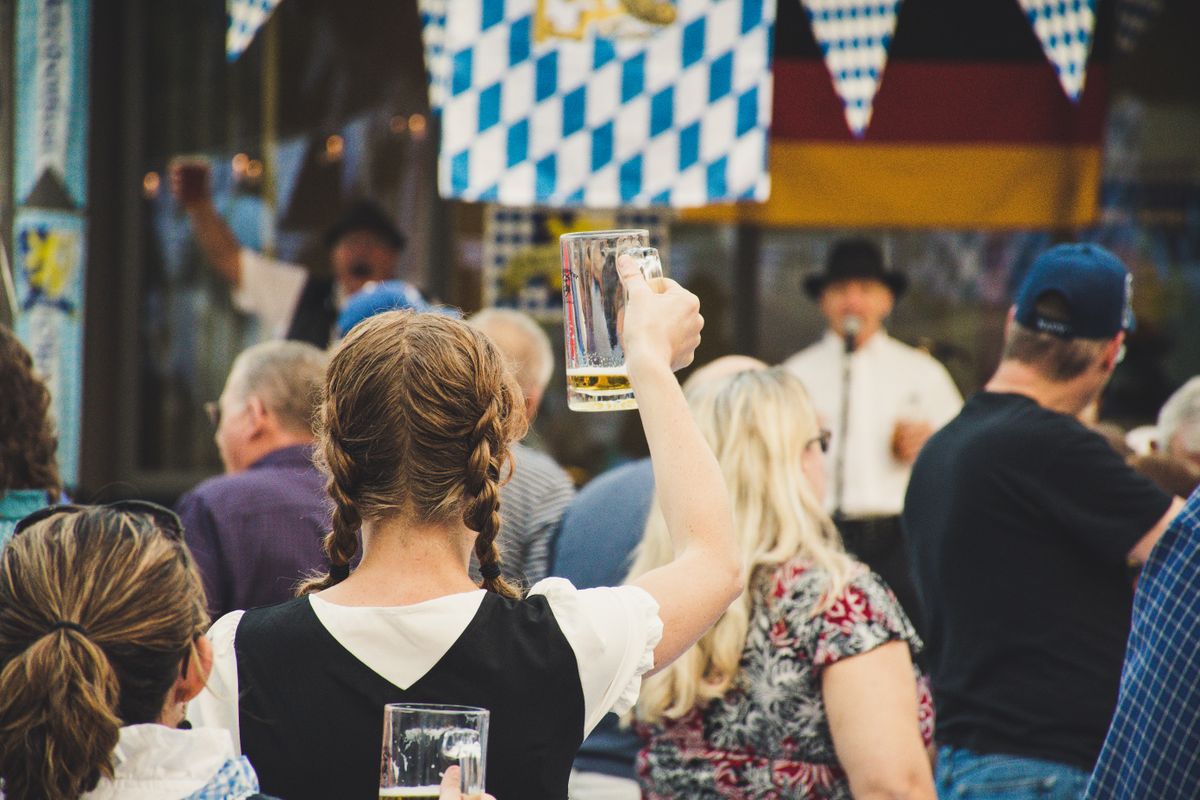
One look around any Oktoberfest tent and the answer to “what should I wear?” becomes obvious: traditional Bavarian dress, worn by the overwhelming majority of guests, locals and tourists alike. You can attend in ordinary clothes, and nobody will mind – but slipping into a Dirndl or a pair of Lederhosen instantly makes you part of the celebration rather than a spectator. This guide explains the traditional outfits, the all-important details, what to put on your feet, and where to find your Tracht for 2026.
For women: the Dirndl explained
The classic women’s outfit is the Dirndl, a four-part ensemble made up of a fitted bodice, a blouse worn underneath, a full skirt, and an apron tied over the front. Dirndls range from simple, affordable cotton versions perfect for a single festival to elaborate silk creations costing several hundred euros. The bodice is designed to be snug and supportive, the skirt usually falls around knee-length for festival wear, and the apron is often a contrasting colour. The overall effect is both flattering and comfortable enough for a long day on your feet – which is exactly what the festival demands.
The apron knot: a hidden language
One detail of the Dirndl carries real meaning, and locals genuinely notice it: the side on which you tie your apron bow signals your relationship status. Tied on the left, it means you are single and available; on the right, that you are taken – married or in a relationship. A bow at the centre front traditionally indicates a child or a virgin, and one at the centre back a widow, or that the wearer is a waitress working the tent. It is a small thing, but tying it deliberately is part of wearing the Dirndl properly.
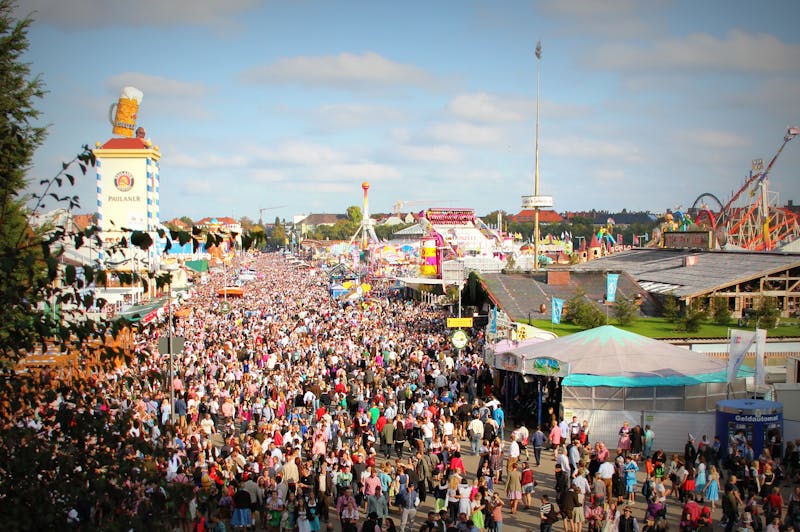
For men: Lederhosen explained
The men’s equivalent is Lederhosen – leather breeches, traditionally made from deer, goat or cow leather, worn with a checked or white shirt, sturdy shoes and often wool socks. They come in short (above the knee) and knee-length (Bundhosen) styles, with the short version being the classic festival choice. A quality pair is an investment of €150–300 or more, but lasts for decades and is famously never washed – the patina that builds up over years is considered a mark of authenticity. Held up by traditional H-shaped braces and finished with a checked shirt, they are surprisingly comfortable and built for exactly this kind of long, lively day.
Shoes, layers and accessories
Whatever you wear above the ankle, comfortable closed shoes are essential – you will be standing, walking and dancing for hours on ground that can be muddy, so leave the heels and the open sandals at home. Men wear brown leather shoes or traditional Haferlschuhe; women choose flats or low block heels. Bring a light jacket or cardigan for the cool September evenings, keep any bag small (anything over about three litres is banned from the grounds), and finish the look with understated traditional touches rather than novelty props – a ribbon choker or a decorative chain, not plastic accessories.
Where to buy or rent your Tracht
You have three good options. Order online ahead of your trip for the widest choice and best prices, allowing time to try it on and exchange sizes. Buy in Munich, where Trachten shops, department stores and even supermarkets stock outfits in festival season, though prices and crowds peak as the festival nears. Or rent a complete outfit, which several Munich shops offer if you only need it once. Whichever route you take, try your outfit on in advance, because a well-fitted Dirndl or pair of Lederhosen makes an enormous difference to how comfortable and confident you feel all day.
Is Tracht required – and the bottom line
To be clear: there is no dress code at Oktoberfest, and you will be served and warmly welcomed in normal clothes. But Tracht is comfortable, photogenic, genuinely fun and worn by the vast majority of guests, so if you are travelling specially for the festival it is well worth the modest effort and cost. The one rule that matters is to wear the real thing, even a simple, inexpensive version, rather than a cheap novelty costume, which locals find disrespectful to a living tradition. Dress the part with a little authenticity and respect, and you will find the whole experience opens up – the people around you warmer, the photos better, and the day altogether more magical.
Frequently asked questions
Do I have to wear Tracht to Oktoberfest? No – there is no dress code, but most visitors wear it and it adds greatly to the experience.
What does the apron knot mean? Left for single, right for taken, centre front for a child or virgin, and back for a widow or waitress.
How much does an outfit cost? A simple, authentic Dirndl or pair of Lederhosen starts around €60–120; quality leather and silk cost more and last for years.
What shoes should I wear? Comfortable, closed, flat or low-heeled shoes you can stand and walk in for hours.
Final styling tips
Once you have your Dirndl or Lederhosen sorted, a few finishing touches complete the look and keep you comfortable through a long festival day. For women, traditional accessories like a ribbon choker, a small shoulder shawl, simple jewellery and a wicker handbag elevate the outfit, while braided or loosely waved hair and a single fresh flower add an effortless, photogenic charm. For men, the look is finished with a checked or white Trachtenhemd, H-shaped braces, wool socks and sturdy brown shoes, perhaps with a decorative chain across the front. In both cases, the guiding principle is understated authenticity rather than over-the-top accessorising – let the Tracht itself be the centrepiece.
Above all, remember that comfort and respect matter more than perfection. Choose breathable fabrics and well-fitted pieces you can move, sit and dance in for hours, dress in layers for the swing from warm tents to cold evenings, and wear shoes you can stand in all day. Get those basics right, wear a simple authentic outfit with pride, and you will not only look the part – you will feel completely at home in the tents, which is exactly what wearing Tracht to Oktoberfest is all about.
Read our detailed Dirndl buying guide and Lederhosen guide, plan with the trip planner, and check the 2026 dates.