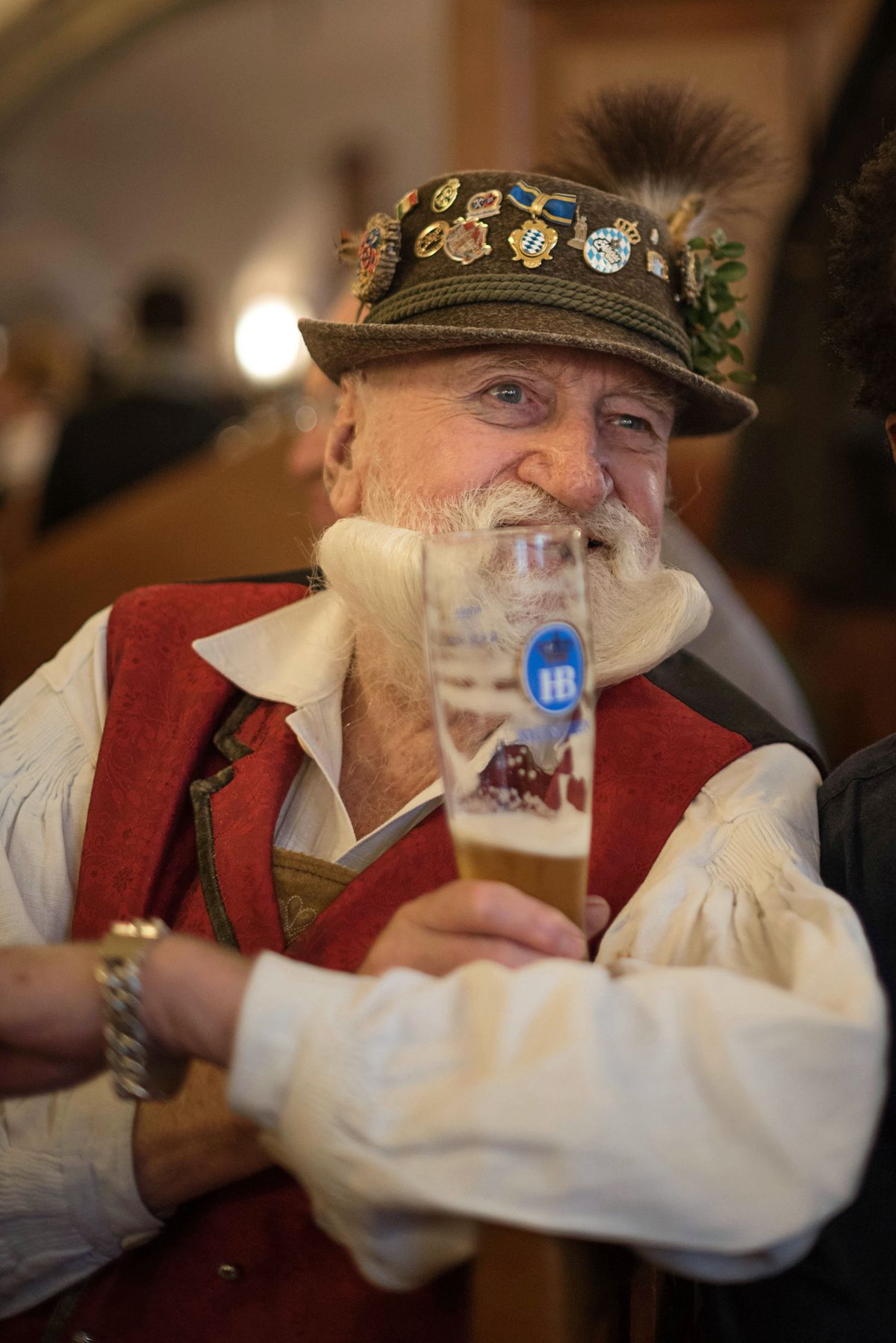
Beer is the beating heart of Oktoberfest, but not just any beer will do. Strict rules govern what can be poured on the Theresienwiese, only six breweries are allowed to serve it, and the festival lager itself is a special, stronger brew made just for the occasion. Understanding what is in your stein – where it comes from and what makes it different – will make every Maß you drink in 2026 taste all the better. Here is everything you need to know about Oktoberfest beer.
What makes Oktoberfest beer special
The beer served at Oktoberfest is not the same lager you would buy in a Munich supermarket. By regulation, only beer that is brewed within the city limits of Munich, conforms to the centuries-old Reinheitsgebot (the German Beer Purity Law of 1516, which permits only water, barley, hops and yeast), and meets the festival’s strength requirement may carry the protected name Oktoberfest Bier. It is a touch stronger than everyday lager, at around 6% alcohol, and is brewed specially each year for the festival – which is one very good reason to pace yourself, because it goes down far more easily than its strength suggests.
Märzen and Festbier explained
Historically, the festival beer was a Märzen – a malty, amber-coloured lager brewed in March (März) and lagered in cool cellars over the summer to be ready for autumn. Rich, smooth and slightly sweet, Märzen was the classic Oktoberfest style for generations. In more recent decades most tents have shifted to a paler, golden, lighter-bodied beer known as Festbier or Wiesnbier, which is crisp, highly drinkable and still around 6%. Both share the same smooth, sessionable character that defines the festival; the Märzen style is maltier and darker, the modern Festbier brighter and more golden.
The six breweries
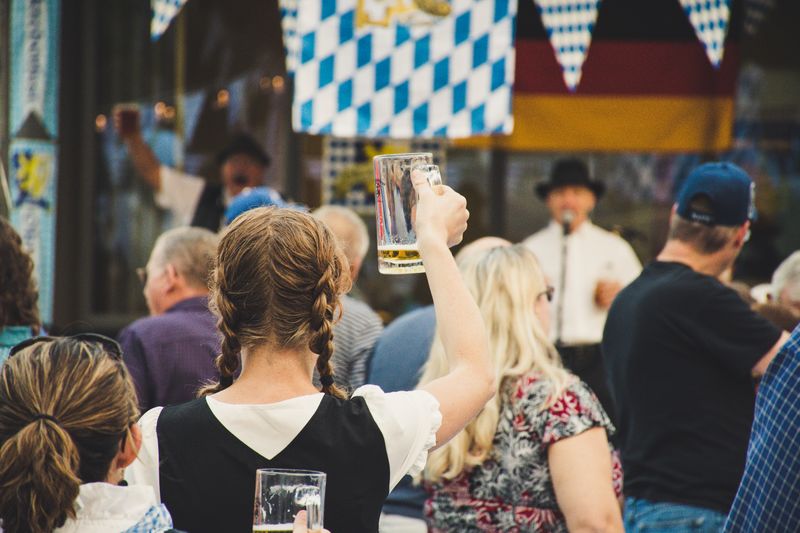
Only six historic Munich breweries are permitted to serve at Oktoberfest, and each is tied to one or more tents. Augustiner, the oldest independent brewery in Munich, is adored by locals and still serves much of its festival beer from traditional wooden barrels, which many insist gives a smoother taste. Hacker-Pschorr, “the heaven of the Bavarians”, pours its beer in the beautiful Hacker tent. Hofbräu, once the royal court brewery, fills the most international tent on the grounds. Löwenbräu, marked by its roaring lion, and Spaten, the brewery of the Schottenhamel and Ochsenbraterei tents, are both Munich institutions. And Paulaner, one of the most globally recognised, crowns its tent with a giant rotating stein. Each beer has its own subtle character, and tasting your way between tents is a pleasure in itself.
The Maß: how it is served
There is only one size at Oktoberfest: the Maß, a full litre served in a heavy glass mug that weighs over a kilogram empty and well over two kilograms full. There are no half-measures in the big tents – you order by the litre or not at all. A Maß in 2026 is expected to cost roughly €15–16, and you tip your server a euro or two on top. If a full litre of strong lager feels like a lot, ask for a Radler, which mixes the beer with lemonade for a lighter, refreshing drink that is perfectly acceptable and very popular on a warm afternoon.
Drinking it well
Because the festival beer is stronger and smoother than it tastes, the golden rule is to pace yourself: drink water between steins, eat hearty food throughout the day, and do not try to match anyone else’s rhythm. The smooth Festbier slips down dangerously easily, and the difference between a perfect day and a difficult one is almost always how steadily you drank. Savour each Maß, make it last, and you will still be singing when the band plays its final song.
Non-alcoholic and other options
You do not have to drink strong lager to enjoy the tents. Every tent offers alcohol-free wheat beer, water, soft drinks and Spezi (a cola-and-orange mix), and the Weinzelt serves wines and sparkling Sekt for those who prefer the grape to the grain. Designated travellers, non-drinkers and anyone simply taking a break are all well catered for – the atmosphere, the music and the food are every bit as good with a Spezi in hand.
Frequently asked questions
How strong is Oktoberfest beer? Around 6% alcohol – noticeably stronger than typical lager, and smoother than it tastes, so pace yourself.
What is Märzen? The traditional malty amber lager brewed in March for the festival; many tents now serve a paler golden Festbier instead.
Which breweries serve at Oktoberfest? Only six Munich breweries: Augustiner, Hacker-Pschorr, Hofbräu, Löwenbräu, Paulaner and Spaten.
Can I get a smaller beer? Not in the big tents – beer is served only by the litre, though a Radler is a lighter option.
Tasting the difference between the breweries
Part of the fun of Oktoberfest is noticing how the six breweries differ. Augustiner, served from wooden barrels in its tent and the Fischer-Vroni, is often praised as the smoothest and softest. Hofbräu tends to be crisp and easy-drinking, suiting its lively international crowd, while Paulaner and Hacker-Pschorr lean slightly fuller and rounder. Spaten and Löwenbräu sit comfortably in the classic Munich middle ground. The differences are subtle – all six are excellent – but spending an afternoon comparing a couple of tents is one of the most enjoyable ways to appreciate just how much care goes into the festival beer.
A note on serving and froth
You may notice debate about the head on your beer. A proper Maß should be poured almost to the brim with only a small head, and if you feel short-changed it is perfectly acceptable to (politely) point it out. The heavy glass steins keep the beer cool, and because they are sold by the litre, taking your time is rewarded – there is no rush, and savouring each one slowly is both more enjoyable and far kinder to your day.
Which Oktoberfest beer is the smoothest? Many drinkers single out Augustiner, especially when served from the traditional wooden barrels.
Can I taste several breweries in one visit? Yes – hopping between a couple of tents to compare their beers is a popular and enjoyable way to spend an afternoon.
Now you know your beer, choose your tent in our complete beer-tent guide, plan your day with the trip planner, and check the 2026 dates. Prost!