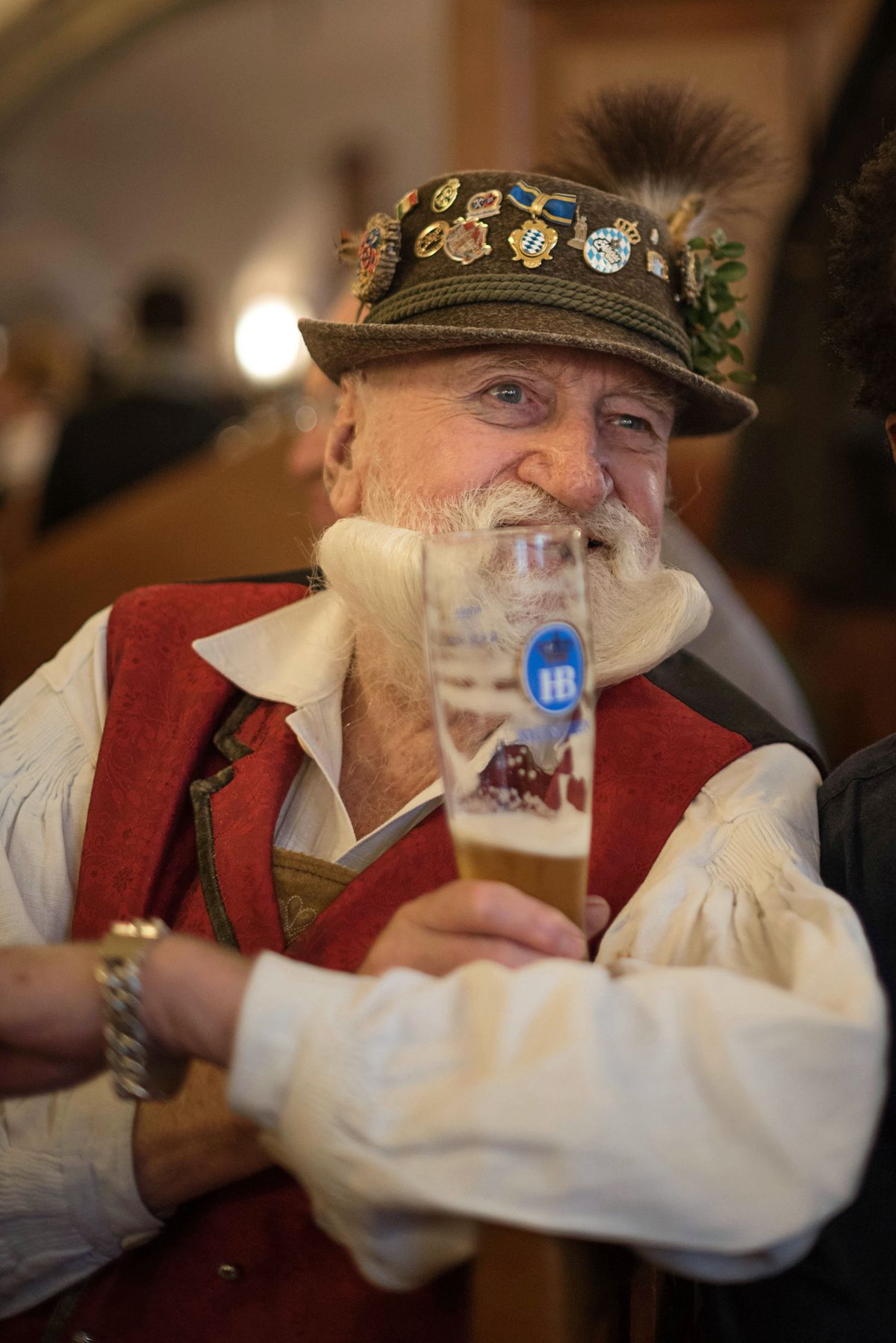
The beer tents are the beating heart of Oktoberfest. Spread across the Theresienwiese in Munich, these vast temporary halls seat thousands of guests under canvas, serve beer brewed specially for the festival, and each carry their own atmosphere, history and crowd. With 17 large tents and around 21 smaller ones for 2026 (running 19 September to 4 October), knowing the differences before you go makes all the difference between a frustrating day and a perfect one. This complete guide walks you through how the tents work, profiles every major tent, explains reservations and prices, and shares the insider tactics that get you a seat even on a busy day.
How the beer tents work
First, the good news: entry to every tent is completely free, and you do not need a ticket to walk in. The catch is that on weekends and after midday the big tents fill up fast, and security closes the doors when they reach capacity – sometimes as early as 10 or 11am on a Saturday. You are only served while seated, so the single most important rule at Oktoberfest is simple: find a spot at a table. Roaming the aisles with a stein in hand is not allowed, and waitstaff will only take your order once you are sitting on a bench.
Every drop of beer served comes from one of Munich’s six traditional breweries – Augustiner, Hacker-Pschorr, Hofbräu, Löwenbräu, Paulaner and Spaten – and each large tent is tied to one of them. Only beer brewed within the Munich city limits to the Reinheitsgebot purity law may be served, and it is a stronger Märzen or Festbier at around 6% ABV. It is sold only by the litre, in the famous one-litre glass Maß, which in 2026 is expected to cost roughly €15–16 each.
Reservations: how they really work
A table reservation is the surest way to guarantee seating for your group. Reservations are made directly with each individual tent – not through any central website – and usually cover a full bench of around ten people. They are almost always sold in blocks that include food and beer vouchers (typically two Maß of beer and half a chicken per person), so a reservation is really a pre-paid package rather than just a seat. Most tents open their reservation books early in the year, often in spring, and the prime weekend evening slots sell out within days. If you want a guaranteed table on a Friday or Saturday night, plan months ahead. Reservations are usually split into a midday and an evening session, and you do not pay for the table itself – only the vouchers, which you then redeem inside.
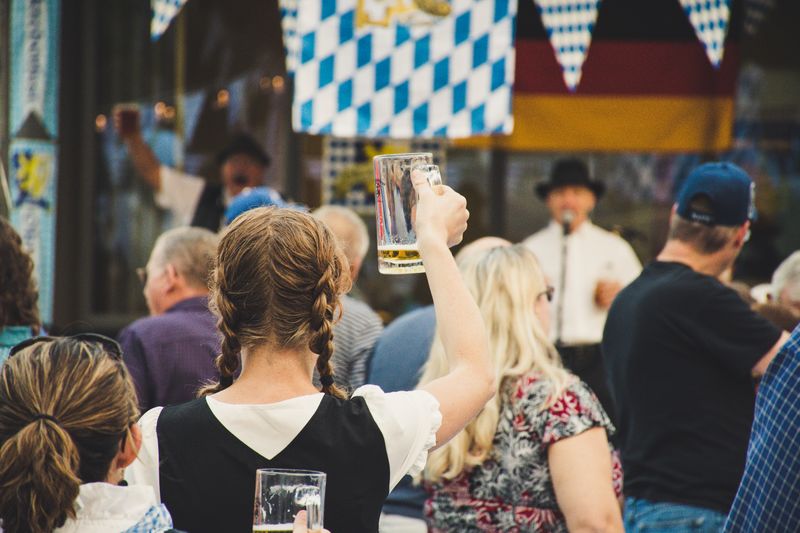
The legendary large tents
Schottenhamel is where it all begins: at noon on opening Saturday the Mayor of Munich taps the first keg and cries “O’zapft is!”. It is one of the largest tents and hugely popular with younger crowds and students. Hofbräu-Festzelt is the most international tent, beloved by visitors from the USA, UK and Australia, and the only one with a dedicated standing area in front of the band – the easiest place to find a spot without a reservation if you do not mind standing. Hacker-Festzelt, known as the “Heaven of the Bavarians”, has a stunning painted-sky ceiling and switches to a rock band in the evenings.
Augustiner-Festhalle is widely loved as the most traditional and family-friendly large tent. It serves its beer from wooden barrels (Hirsch) rather than steel kegs, which many locals insist gives a smoother taste, and its daytime atmosphere is warm and relaxed. Paulaner Festzelt (the Winzerer Fähndl) is crowned by a giant rotating tower of beer and tends to attract a slightly more polished crowd, while Löwenbräu-Festzelt announces itself with a roaring mechanical lion above the entrance. The Marstall, one of the newer tents, has an elegant carousel-and-horse theme, and the Bräurosl (Pschorr) is famous for its yodeller and a large, friendly capacity.
Tents with a speciality
Not every tent is about the biggest party. Ochsenbraterei roasts whole oxen on a spit – a spectacle in itself, and the place to order a plate of slow-roasted ox. Fischer-Vroni is the home of Steckerlfisch, whole fish grilled on a stick over open flames, and pours Augustiner from the barrel. The Weinzelt swaps beer for more than a dozen wines and sparkling Sekt (though it also serves a wheat beer), and the celebrity-favourite Käfer Wiesn-Schänke stays open until 1am – later than the rest – making it a magnet for night owls and the occasional famous face.
The small tents are worth your time
Beyond the giants, around 21 smaller tents offer charm the big halls cannot. They are easier to get into, quieter, and often serve the best food – think the coffee and cake of the Café Kaiserschmarrn, the wine taverns, the sausage kitchens and the cosy Glöckle Wirt. If you are visiting on a packed weekend and the large tents have closed their doors, the small tents are your secret weapon for finding a seat and a calmer atmosphere.
Which tent should you choose?
If it is your first time and you want the classic boisterous, international atmosphere, head for Hofbräu or Schottenhamel. For a calmer, more authentic Bavarian feel, choose Augustiner or one of the small tents. Travelling with children? The smaller tents and the Augustiner-Festhalle are gentler, especially on weekday afternoons. Foodies should make a beeline for Ochsenbraterei or Fischer-Vroni, and anyone who prefers wine will be perfectly happy in the Weinzelt. There is genuinely no wrong choice – but matching the tent to your mood transforms the day.
Insider tips for getting a table without a reservation
- Arrive early. On weekdays you can usually walk in until early afternoon; on weekends, be at the doors before 9am.
- Try the standing area at Hofbräu if seated tables are full.
- Go for the small tents when the big ones close their doors.
- Split up. A pair can squeeze onto a half-empty bench far more easily than a group of eight.
- Be friendly. Tables are communal – politely ask “Ist hier frei?” and you will usually be waved in.
Etiquette and practicalities
- Bring cash – most tents do not take cards, and you tip your server a euro or two per Maß.
- Stand on a bench to sing along, but never on the table – that gets you thrown out.
- Pace yourself with water between beers; the Märzen is strong and the day is long.
- Tents typically open at 9–10am on weekends and 10am on weekdays, with last orders around 10:30pm (later at Käfer and the Weinzelt).
Frequently asked questions
Do I have to pay to enter a tent? No – entry is free. You only pay for what you eat and drink, or for a reservation package if you book one.
Can I just turn up without booking? Yes, especially on weekday mornings and afternoons. Weekends and evenings are much harder without a reservation.
Which tent is best for first-timers? Hofbräu for the lively international scene, or Augustiner for a more traditional, relaxed day.
Ready to plan the rest of your visit? Use our trip planner to build a day-by-day itinerary and budget, or browse all 2026 festival dates and cities to lock in your trip. Whichever tent you choose, raise your stein, find a friendly table, and enjoy the greatest folk festival on earth. Prost!