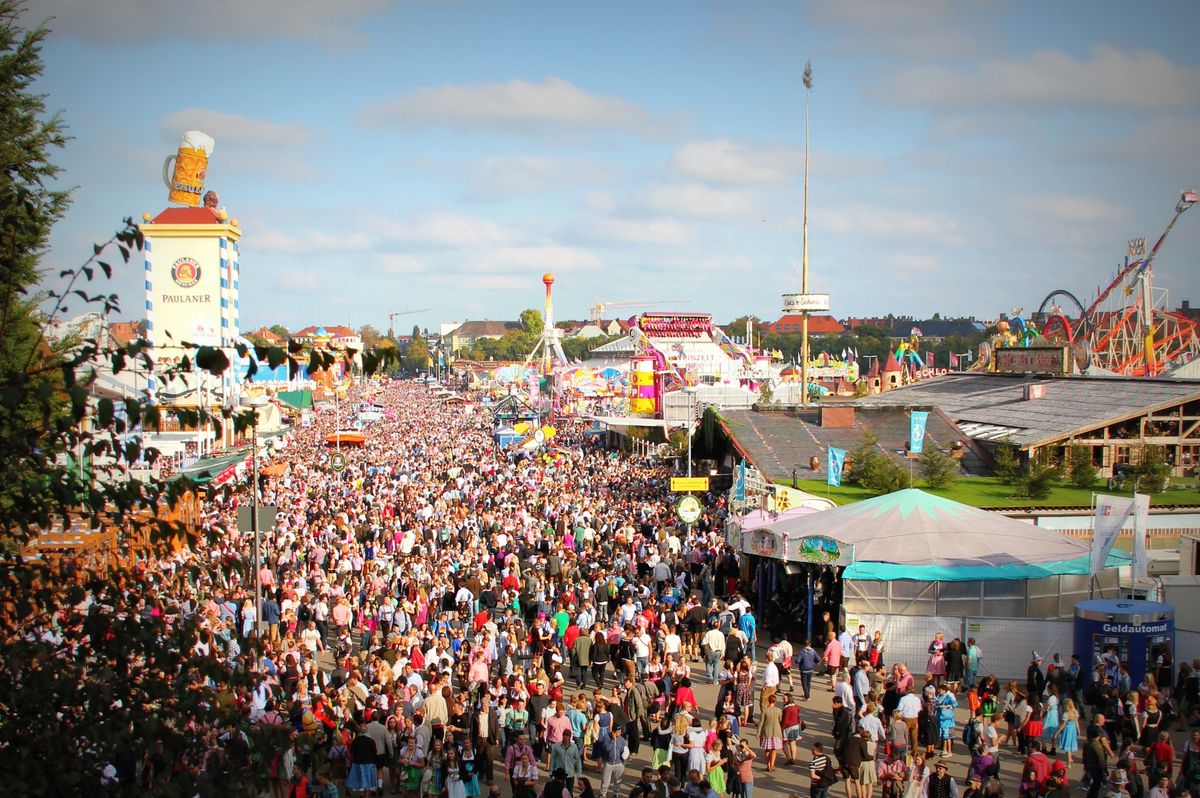
Oktoberfest does not simply open its doors – it begins with one of the most famous traditions in Germany. At exactly twelve noon on the first Saturday, the Mayor of Munich hammers a tap into the first wooden keg, shouts two short words, and a fortnight of celebration officially begins. If you can be there for it, the opening weekend is the festival at its most ceremonial and electric. This guide explains everything that happens across the opening weekend, the history behind it, and exactly how to experience it for yourself in 2026.
“O’zapft is!” – the tapping of the first keg
The heart of the opening is the Anstich, the tapping of the first barrel, which takes place at noon in the Schottenhamel tent. The Lord Mayor of Munich drives a brass tap into the keg with a wooden mallet and, once the beer flows cleanly, calls out “O’zapft is!” – Bavarian for “It’s tapped!”. A good-natured tradition tracks how many mallet strokes it takes: the fewer the better, with two being a point of civic pride and anything in single digits considered a success. Only after the first Maß is handed ceremonially to the Minister-President of Bavaria, and a twelve-gun salute is fired, may every other tent across the grounds begin serving beer. Until that moment, not a single drop is officially poured.
The grand entry of the landlords
Before the tapping, the morning belongs to the Einzug der Wiesnwirte – the ceremonial entry of the tent landlords and breweries. From around 10:45am a colourful procession of horse-drawn brewery drays, decorated floats, brass bands, waitresses and the festival hosts in their finest Tracht winds through the streets of Munich from the city centre to the Theresienwiese. The beautifully groomed heavy horses, the gleaming beer wagons piled with barrels, and the marching bands make a wonderful spectacle – and it is completely free to watch from the pavements along the route. Getting there an hour early secures a good spot.
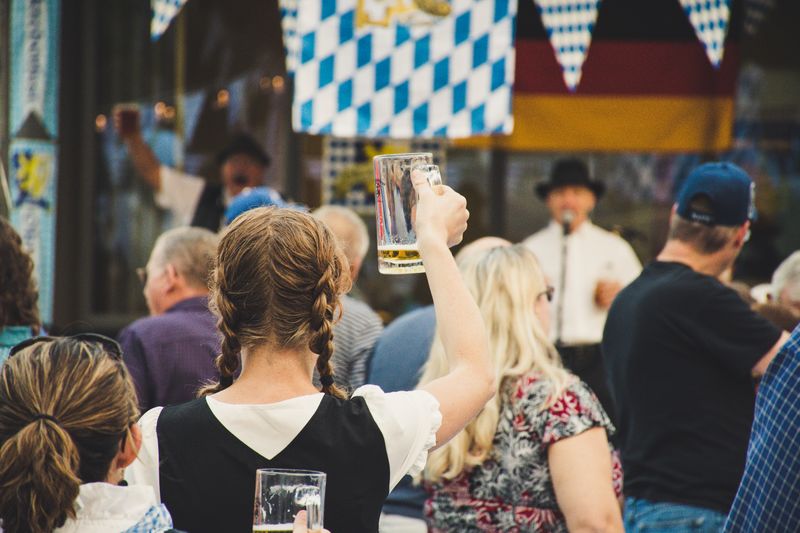
The costume and riflemen’s parade
On the first Sunday, Munich hosts the enormous Trachten- und Schützenzug, the traditional costume and riflemen’s parade, and it is arguably the most beautiful event of the whole festival. Around 9,000 participants in historic regional costumes, folk-dance groups, marching bands, flag-throwers, decorated wagons, livestock and riflemen’s clubs march roughly seven kilometres through the city centre to the festival grounds. First held in 1835 to celebrate a royal silver wedding, it is one of the largest parades of its kind in the world and a breathtaking, free display of Bavarian and Alpine heritage. Arrive early and bring a camera.
A short history of Oktoberfest
Oktoberfest dates back to 1810, when Crown Prince Ludwig (later King Ludwig I) married Princess Therese of Saxe-Hildburghausen. The citizens of Munich were invited to celebrate on the fields in front of the city gates – fields still named the Theresienwiese in her honour, which is why locals simply call the festival the “Wiesn”. That first celebration ended with horse races, which were repeated in following years; agricultural shows, food stalls, beer and a funfair gradually grew up around them, and over two centuries the event evolved into the sixteen-day festival we know today. The opening ceremony preserves that original sense of civic occasion every single year.
The traditional gun salute and the quiet days
The festival keeps several gentler traditions too. After the noon tapping, members of a Bavarian riflemen’s guild fire a handgun salute on the steps of the Bavaria statue overlooking the grounds. And out of respect for the music traditions, the tents observe quieter, more traditional brass music until 6pm before the louder party bands take over – so the opening day is not all chaos. The festival traditionally ends with a final gun salute and the lighting of candles inside the tents on the last evening.
How to experience the opening
- Getting a seat in Schottenhamel for the noon tapping is extremely difficult without a reservation made months ahead – the tent fills before 9am on opening day.
- Watch the landlords’ parade for free from the streets between the city centre and the Theresienwiese on opening Saturday morning.
- See the costume parade on the first Sunday for the most spectacular free event of the festival.
- Arrive very early – before 8–9am – if you want any chance of a tent spot on opening day.
- Prefer calm to chaos? The opening weekend is the busiest of the entire run; a weekday later on is far easier and just as much fun.
Is it worth being there for the opening?
If you love ceremony, history and atmosphere, the opening is unforgettable – the two parades alone are worth the trip. If you mainly want a relaxed day in a tent with a good table, you may actually enjoy a quieter weekday more. Many seasoned visitors do both: watch the parade on the Saturday or Sunday, then return midweek for an easier tent experience.
Frequently asked questions
What time is the keg tapping? Exactly 12:00 noon on the opening Saturday, in the Schottenhamel tent.
Can I watch the parades for free? Yes – both the landlords’ entry and the costume parade are free to watch from the streets.
What does “O’zapft is” mean? It is Bavarian for “It’s tapped!” – the signal that the festival’s beer is officially flowing.
How the festival closes
Just as Oktoberfest opens with ceremony, it ends with one. On the final Sunday evening, the tradition in many tents is for guests and staff to light sparklers and candles and hold them aloft while the band plays a last, slower song – a genuinely moving sight after sixteen days of celebration. A closing gun salute is fired beneath the Bavaria statue, and the festival is formally declared over for another year, leaving the great tents to be quietly dismantled over the following weeks.
Records and curiosities
The opening tradition comes with its own folklore. The number of mallet strokes each mayor needs to tap the first keg is recorded year on year, and a clean two-stroke tapping is a point of civic pride. Over the decades the ceremony has only been delayed or altered a handful of times, and it remains one of the most-watched live moments on Bavarian television each September – proof that even locals never tire of hearing “O’zapft is!”
Plan around the dates with our trip planner, choose your beer tent, and see every 2026 festival date. Whether or not you make the noon tapping, hearing a whole city shout “O’zapft is!” is a moment you will never forget.