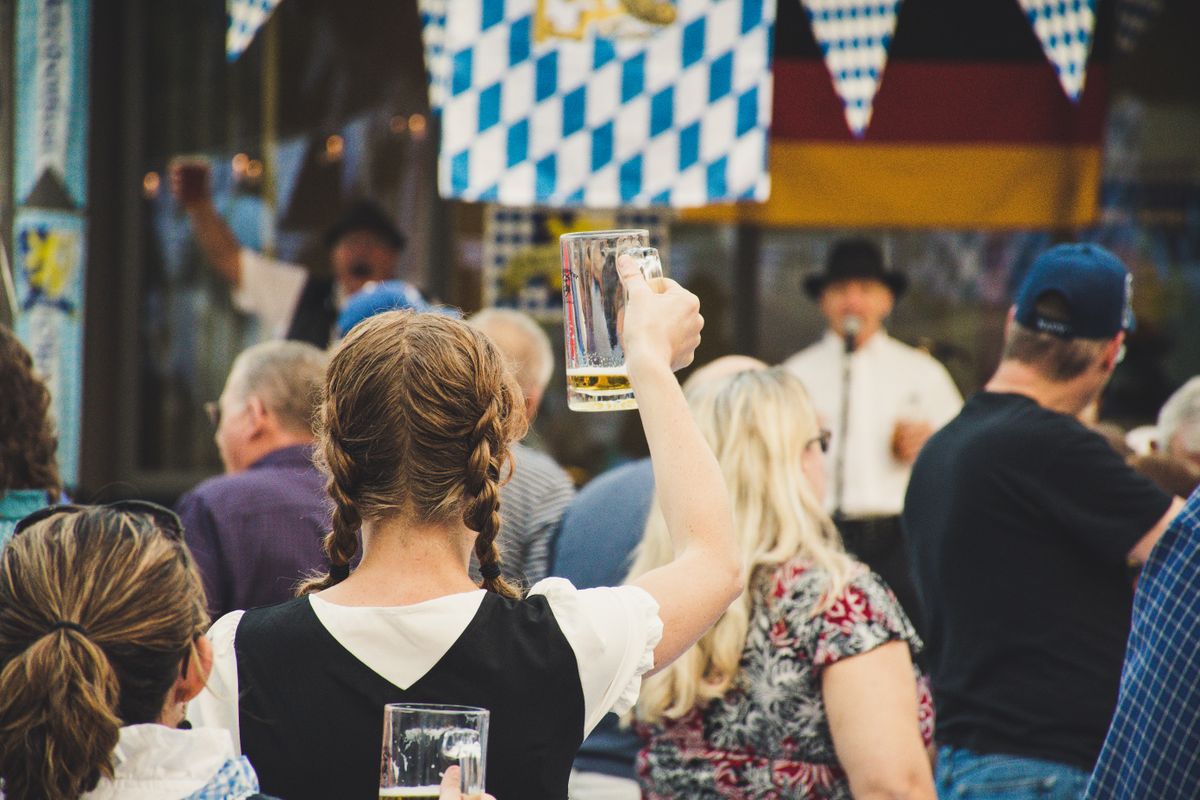
A well-chosen Dirndl is the centrepiece of any woman’s Oktoberfest outfit, and buying one is part of the fun of preparing for the festival. But with so many styles, lengths, fabrics and price points to choose from, it can be hard to know where to start – especially if it is your first time. This complete Dirndl buying guide for 2026 walks you through the parts of a Dirndl, how to get the size and fit right, which style to choose, and where to buy or rent one.
The parts of a Dirndl
A complete Dirndl outfit has four elements. The bodice and skirt usually come as one connected dress; the blouse is worn underneath and is bought separately; and the apron ties over the front. The blouse can be high-necked, square-necked or off-the-shoulder, and the apron is often a contrasting colour. Together these create the classic, flattering silhouette – fitted through the bodice, full in the skirt – that makes the Dirndl so iconic.
Getting the size and fit right
Fit is everything with a Dirndl. The bodice should be snug – it is designed to be fitted and supportive – so pay close attention to your bust and waist measurements rather than relying on dress-size guesses, and check each retailer’s size chart, as they vary. Lacing at the front allows some adjustment, which helps. If you are buying online, order in good time so you can try it on and exchange sizes if needed. A blouse that fits well under the bodice completes the look, so buy the two together where you can.
Choosing a length
Dirndls come in three main lengths. The mini (above the knee) is youthful and popular with younger wearers; the midi (just below the knee or mid-calf) is the most versatile and the safest choice for the festival; and the maxi (ankle-length) is the most traditional and elegant, often worn for formal occasions. For Oktoberfest, a midi length is comfortable, practical for a long day on your feet, and always appropriate.
Fabric, colour and quality
Dirndls range from simple, affordable cotton versions perfect for a single festival to luxurious silk and embroidered pieces that cost several hundred euros and last for years. Cotton is breathable and practical; silk is dressier. Colours run from traditional reds, greens and blues to soft pastels and bold modern prints – choose whatever suits you, as there is no single “correct” colour. Check the stitching, lacing and lining for quality; a well-made Dirndl holds its shape and flatters far better than a cheap one.
Do not forget the apron knot
One essential detail: the side you tie your apron bow signals your relationship status. Left means single, right means taken, a bow at the centre front traditionally indicates a child or virgin, and one at the back a widow or a waitress. Locals genuinely read it, so tie yours deliberately – it is part of wearing the Dirndl correctly.
Where to buy or rent
You have three good options. Order online ahead of your trip for the widest choice and best prices, allowing time to check the fit. Buy in Munich, where Trachten shops, department stores and even supermarkets stock Dirndls in festival season, though prices and crowds peak as the festival nears. Or rent a complete outfit, which several Munich shops offer if you only need it once. Whichever you choose, try it on in advance so you feel comfortable and confident on the day.
Frequently asked questions
How much does a Dirndl cost? From around €40–60 for a simple cotton set to several hundred for silk and embroidered pieces; a good starter outfit is around €60–120.
What length should I choose? A midi (just below the knee) is the most versatile and practical choice for Oktoberfest.
Should the bodice be tight? Yes – the bodice is designed to be fitted and supportive, with front lacing for fine adjustment.
Can I rent a Dirndl? Yes – several Munich shops rent full outfits if you only need one for a single visit.
Styling your Dirndl
Small touches finish the look beautifully. Traditional accessories include a Kropfband (a ribbon or lace choker), a small shoulder shawl knotted at the front, a wicker or leather handbag, and simple jewellery. For hair, braids, plaits and loose waves all suit a Dirndl, and a fresh flower or a small floral crown is a popular, photogenic touch. Keep footwear comfortable and flat or low-heeled for a long day on your feet. The aim is an elegant, put-together look rather than an over-accessorised one – let the Dirndl itself be the star.
Common mistakes to avoid
A few errors are easy to sidestep. Avoid buying a Dirndl that is too loose in the bodice – it should be fitted and supportive. Steer clear of cheap, costume-shop “sexy” versions, which locals find disrespectful; a simple, authentic Dirndl always looks better. Do not forget to tie the apron bow on the correct side for your relationship status, and do not leave buying or fitting to the last minute, when choice is poor and prices peak. A little planning means a Dirndl you feel wonderful in.
What accessories go with a Dirndl? A ribbon choker, shoulder shawl, simple jewellery and a small handbag, with braided or wavy hair and a flower for a finishing touch.
What is the most common Dirndl mistake? Choosing a bodice that is too loose – it should fit snugly – or buying a novelty costume rather than an authentic one.
Caring for your Dirndl
A Dirndl rewards a little care. Check the labels, as bodices and skirts are often dry-clean only, while many cotton blouses and aprons can be washed gently by hand or on a delicate cycle. Hang the dress rather than folding it so it keeps its shape, store the blouse and apron separately, and a quality Dirndl will be ready to wear festival after festival, looking as good as the day you bought it.
Can I wash a Dirndl? Blouses and aprons can usually be washed gently, but check the label – bodices and skirts are often dry-clean only.
Once your outfit is sorted, read our full guide to what to wear, plan your trip with the trip planner, and check the 2026 dates.