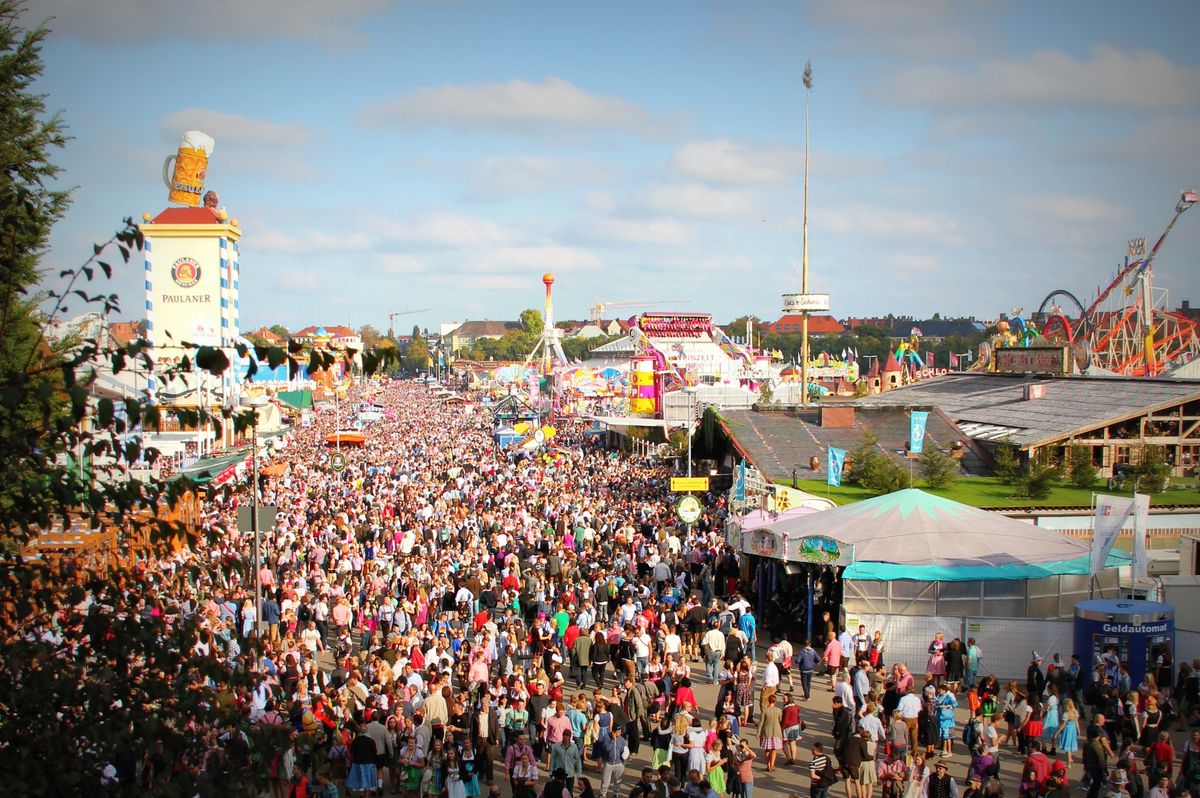
Oktoberfest is far more than the world’s biggest beer festival – it is a living tradition with more than two centuries of history behind it. From a royal wedding celebration in 1810 to the six-million-visitor spectacle of today, the festival has survived wars, epidemics and enormous change while keeping its essential spirit. Here is the story of how Oktoberfest came to be, and how it grew into the global icon it is in 2026.
A royal wedding, 1810
It all began on 12 October 1810, when Crown Prince Ludwig of Bavaria – later King Ludwig I – married Princess Therese of Saxe-Hildburghausen. The citizens of Munich were invited to celebrate on the fields in front of the city gates, and the festivities ended with a grand horse race. The celebration was such a success that it was repeated the following year, and the fields were named the Theresienwiese – “Therese’s Meadow” – in the new queen’s honour. Locals still call the festival simply the “Wiesn”.
From horse races to beer tents
In the early decades, the horse races were the heart of the event, joined by an agricultural show designed to promote Bavarian farming – a tradition that survives today in the Central Agricultural Festival held every few years. As the nineteenth century went on, beer stands appeared and grew, small booths gradually became the vast tents we know, mechanical rides and a funfair developed alongside, and the dates crept earlier into September to take advantage of warmer weather. By the early twentieth century, Oktoberfest had taken on the shape we recognise.
Survival through hard times
Oktoberfest has been cancelled around two dozen times in its history, a testament to how much the world threw at it – and how determined Munich was to bring it back. Cholera epidemics, the two World Wars and the hyperinflation of the 1920s all forced cancellations. In 1980, a tragic bombing at the festival entrance claimed lives and remains a sombre moment in its history, marked by a memorial on the grounds. Most recently, the festival was cancelled in 2020 and 2021 during the global pandemic – only to return to huge crowds, proving once again how deeply it is woven into the life of the city.
The modern festival
Today’s Oktoberfest is a finely organised spectacle drawing around six million visitors from across the globe, with 17 large tents, around 21 small ones, a huge funfair and strict rules protecting its traditions – from the six Munich breweries permitted to serve to the special festival beer brewed each year. In 2010, the festival celebrated its 200th anniversary with the introduction of the Oide Wiesn, a nostalgic area recreating the festival of a century ago with historic rides and folk music, which has become a beloved fixture.
A tradition that endures
For all its growth and modernisation, the magic of Oktoberfest has never really changed. The combination of good beer, hearty food, live music and the warm, inclusive spirit the Germans call Gemütlichkeit is exactly what drew the citizens of Munich to the Theresienwiese in 1810 – and exactly what draws the world there today. Every time the mayor cries “O’zapft is!”, that two-century thread is renewed.
Frequently asked questions
When did Oktoberfest start? In 1810, as a celebration of the wedding of Crown Prince Ludwig and Princess Therese of Bavaria.
Why is it called Oktoberfest if it is in September? The dates were gradually moved earlier for better weather, so most of the festival now falls in September.
How many times has it been cancelled? Around two dozen times, mostly due to wars and epidemics, including 2020 and 2021.
What is the Theresienwiese? The Munich fairground where Oktoberfest is held, named after Princess Therese, whose 1810 wedding the festival first celebrated.
Oktoberfest by the numbers today
The scale of the modern festival is staggering. Each year it welcomes around six million visitors, who drink roughly seven million litres of beer and eat hundreds of thousands of roast chickens, pork knuckles and pretzels. The grounds host 17 large tents – the biggest seating around 10,000 people each – some 21 smaller ones, and more than 150 rides and attractions, all assembled and dismantled around the festival each year. For two weeks, the Theresienwiese effectively becomes a temporary city, complete with its own power supply, postal address and police station.
How the festival has changed – and stayed the same
Over two centuries, the details have evolved enormously: the horse races faded, the beer stands grew into vast tents, the music shifted from folk bands to evening party sets, and the crowd became truly international. Yet the heart of it – people gathering to share good beer, hearty food and live music in a spirit of warmth and welcome – is exactly as it was in 1810. The Oide Wiesn, introduced for the 200th anniversary, even lets visitors step back into the festival of a century ago. It is this blend of change and continuity that keeps Oktoberfest feeling both timeless and alive.
How many people attend Oktoberfest? Around six million each year, making it the largest folk festival in the world.
How much beer is drunk? Roughly seven million litres, served only by the litre in glass steins.
A festival woven into a city’s identity
What makes the history of Oktoberfest so remarkable is not just its age but how completely it has become part of Munich’s very identity. For the people of the city, the Wiesn is not a tourist attraction but a beloved annual homecoming, a fixed point in the calendar around which families, friendships and traditions are organised. Generations of the same families have run the same tents and the same rides; children grow up riding the historic carousels their grandparents rode; and the rituals of the opening tapping and the closing candles are watched with genuine affection year after year. That deep local ownership is precisely why the festival has always returned after every cancellation, and why it has never been allowed to lose its soul to commercialism.
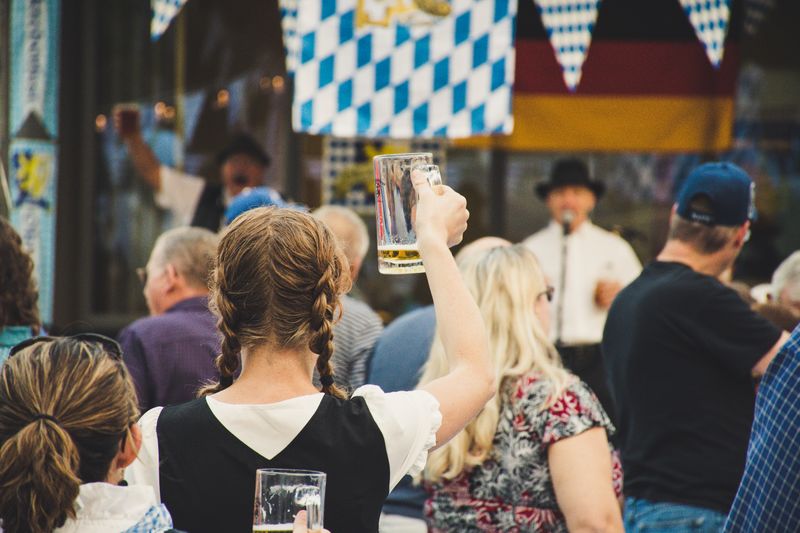
Understanding this history changes how you experience the festival. When you raise your first Maß beneath a painted tent ceiling, you are taking part in a tradition that has continued, with remarkable consistency, for more than two hundred years – through kingdoms and republics, wars and recoveries. Few celebrations anywhere can claim such an unbroken thread, and that sense of continuity is part of what makes standing in a tent at Oktoberfest feel like more than just a good night out.
Experience the living tradition for yourself: plan your visit with our trip planner, read about the opening ceremony, and check the 2026 dates.